Our first step was to visit each case-study house of worship in person.
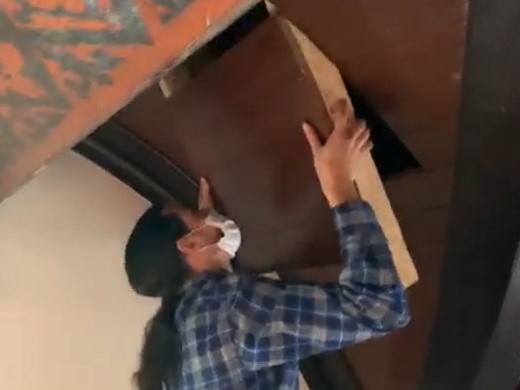
We took a careful look at all windows, doors, floors, attics, crawl spaces, and more. If we saw any problems, such as wall cracks or leaky roofs, we marked them on an inventory form.
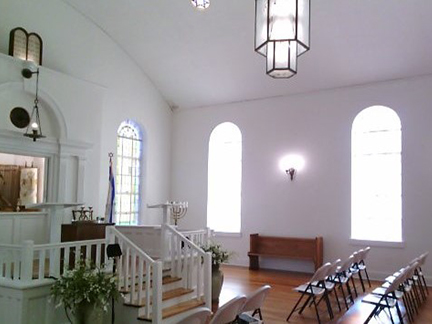
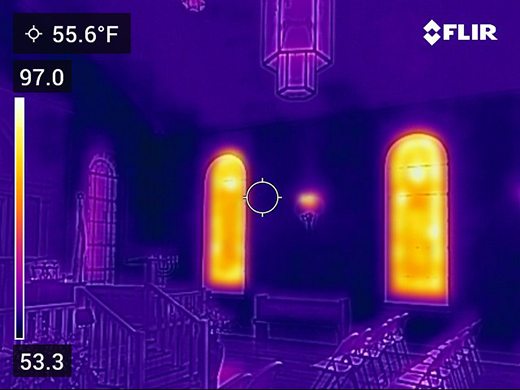
The research team measured all the buildings’ rooms and used that information to make floor plans. Then, we used a thermal camera to see how hot the walls were.
Also, we looked at the grounds and buildings nearby. We considered factors such as proximity to chemical plants, the property’s height above sea level, etc.
Our first step was to visit each case-study house of worship in person.
We took a careful look at all windows, doors, floors, attics, crawl spaces, and more. If we saw any problems, such as wall cracks or leaky roofs, we marked them on an inventory form.
The research team measured all the buildings’ rooms and used that information to make floor plans. Then, we used a thermal camera to see how hot the walls were.
Also, we looked at the grounds and buildings nearby. We considered factors such as proximity to chemical plants, the property’s height above sea level, etc.
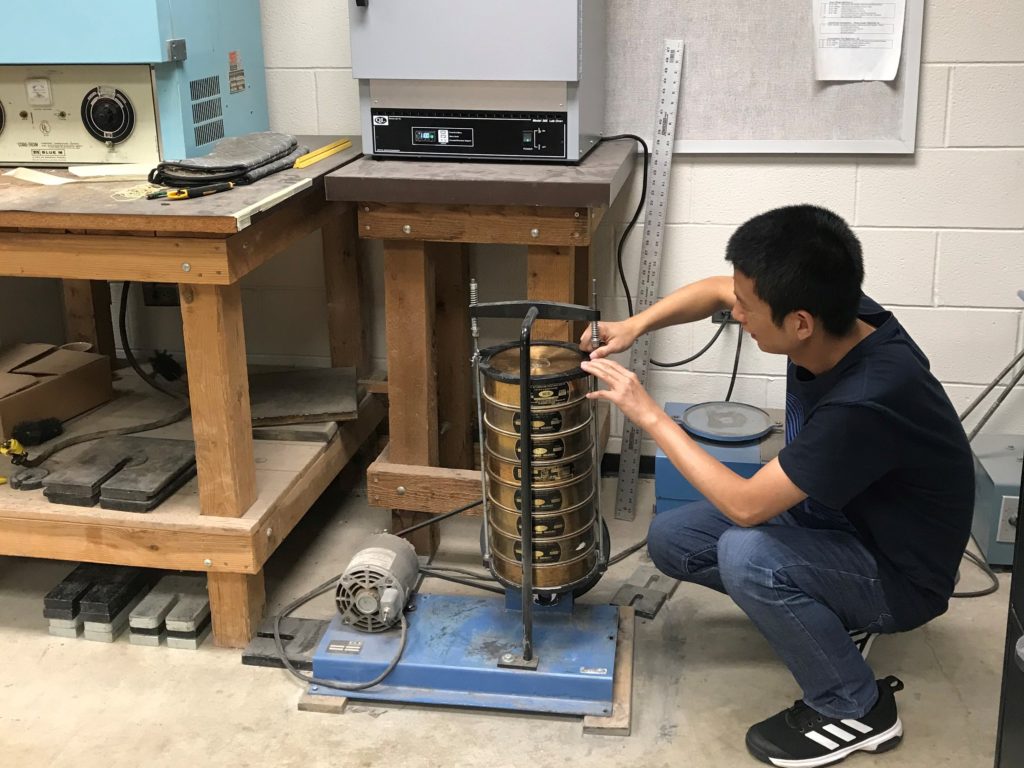
During field visits, a team member dug three small holes on each house of worship’s property and took soil samples. Back in San Antonio, lab analysis is telling us how much the soils grow and shrink as the weather changes. These soil variables can affect how well a building holds up during a major storm.
The research team measured all the buildings’ rooms and used that information to make floor plans. Then, we used a thermal camera to see how hot the walls were.
During field visits, a team member dug three small holes on each house of worship’s property and took soil samples. Back in San Antonio, lab analysis is telling us how much the soils grow and shrink as the weather changes. These soil variables can affect how well a building holds up during a major storm.
The research team measured all the buildings’ rooms and used that information to make floor plans. Then, we used a thermal camera to see how hot the walls were.
Remember the floor plans and inventories we created during the field visits? We took all that information and entered it into an engineering software called SAP2000. During a process called finite element analysis, the software uses all the data we gave it to gauge how well each building would perform in high winds and/or major flooding.
Results of Finite Element Analysis applied to UTSA's case-study structures
Remember the floor plans and inventories we created during the field visits? We took all that information and entered it into an engineering software called SAP2000. During a process called finite element analysis, the software uses all the data we gave it to gauge how well each building would perform in high winds and/or major flooding.
Results of Finite Element Analysis applied to UTSA's case-study structures
Finally, a key part of our research is to learn from the people who have weathered recent storms. That’s why we held a series of knowledge cafés, a type of focus group that included leaders of our nine case studies as well as other historic houses of worship along the Texas Gulf Coast.
Finally, a key part of our research is to learn from the people who have weathered recent storms. That’s why we held a series of knowledge cafés, a type of focus group that included leaders of our nine case studies as well as other historic houses of worship along the Texas Gulf Coast.