The overall goal of this laboratory is to elucidate the relationship between the structure and the mechanical behavior of hard tissues at all length scales: from nano to macro, and from molecules to the whole organ. Building on that understanding, we intend to develop effective strategies for the prediction and prevention of aging- and disease-related failure of these tissues. Clinically, our interests are focused on osteoporotic, fatigue, and age-related bone fractures.
Our research group is composed of postdoctoral research fellows, Ph.D. students, master’s students, undergraduates, research assistants, and research engineers from both the Mechanical Engineering (ME) and Biomedical Engineering (BME) programs. We also collaborate with other laboratories and research groups in the San Antonio area to extend our expertise in biomaterials, biophysics, cell biology, and biochemistry.
Areas of Current and Past Research
1. Nanomechanics of Bone
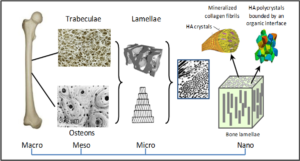
- Structural model of the lamella: mineralized collagen fibrils embedded in a hybrid extrafibrillar nanocomposite
- Elastic behavior
- Plastic behavior
- Viscoelasticity
- Failure mechanisms
1.1 Computational modeling of bone at ultrastructural levels
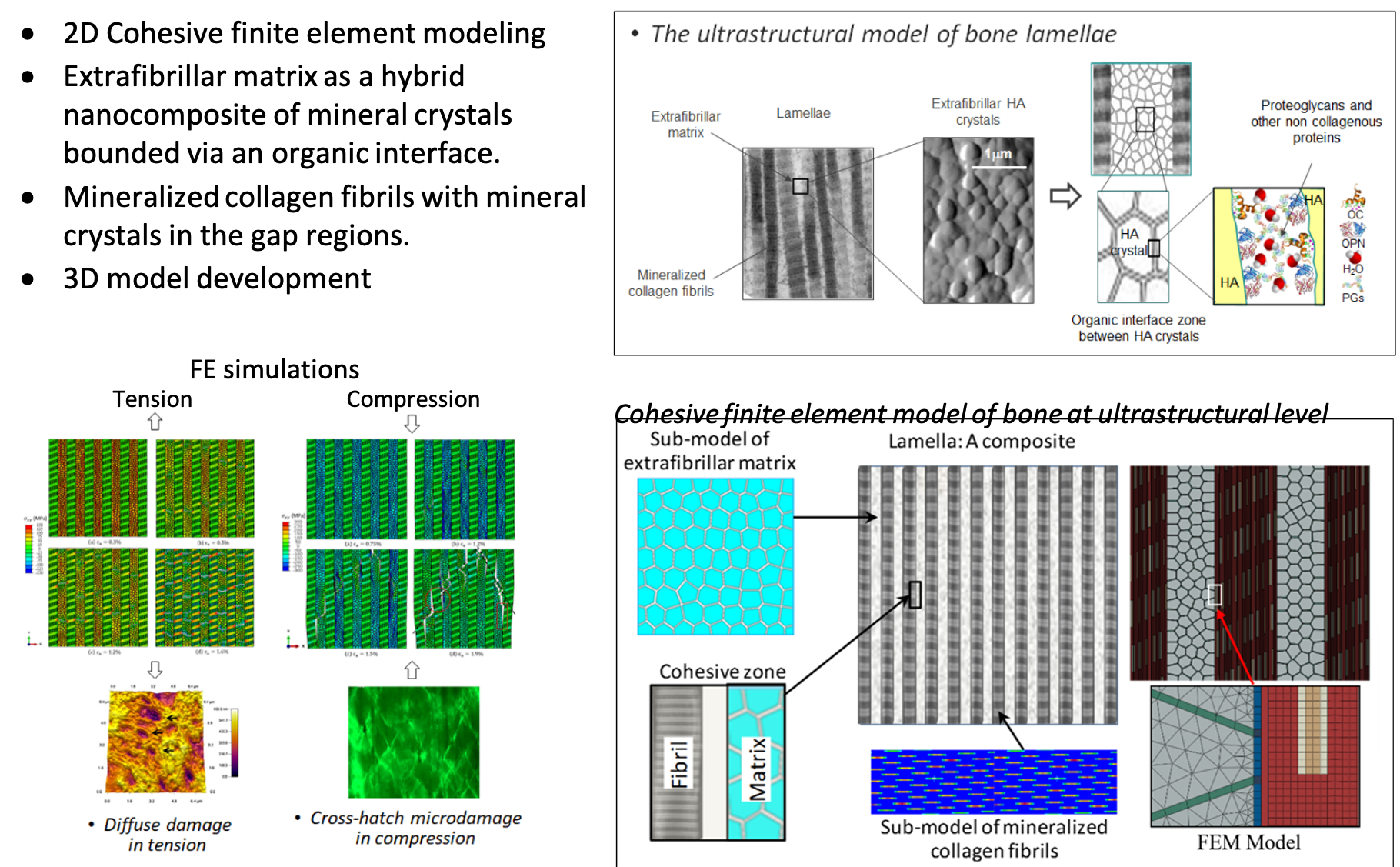
- L. Lin, X. Wang, X. Zeng: An improved interfacial bonding model for material interface modeling, Engineering Fracture Mechanics (2017) 169: 276–291.
- L. Lin, J. Samuel, X. Wang, X. Zeng: Contribution of extrafibrillar matrix to the mechanical behavior of bone using a novel cohesive finite element model, Journal of the Mechanical Behavior of Biomedical Materials (2017) 65: 224–235.
- M. Maghsoudi-Ganjeh, L. Lin, X. Wang, X. Zeng: Computational investigation of ultrastructural behavior of bone using a cohesive finite element approach, Biomechanics and Modeling in Mechanobiology (2019) 18: 463–478.
1.2 Synchrotron X-ray scattering studies of bone nanomechanics

- B. Giri, J. Almer, X. N. Dong, X. Wang: In situ mechanical behavior of mineral crystals in human cortical bone under compressive load using synchrotron X-ray scattering techniques, Journal of the Mechanical Behavior of Biomedical Materials 14 (2012) 101–112.
- X. N. Dong, J. Almer, X. Wang: Post-yield nanomechanics of human cortical bone in compression using synchrotron X-ray scattering techniques, Journal of Biomechanics 44 (2011) 676–682.
1.3 Effect of matrix water on the in situ mechanical behavior of bone
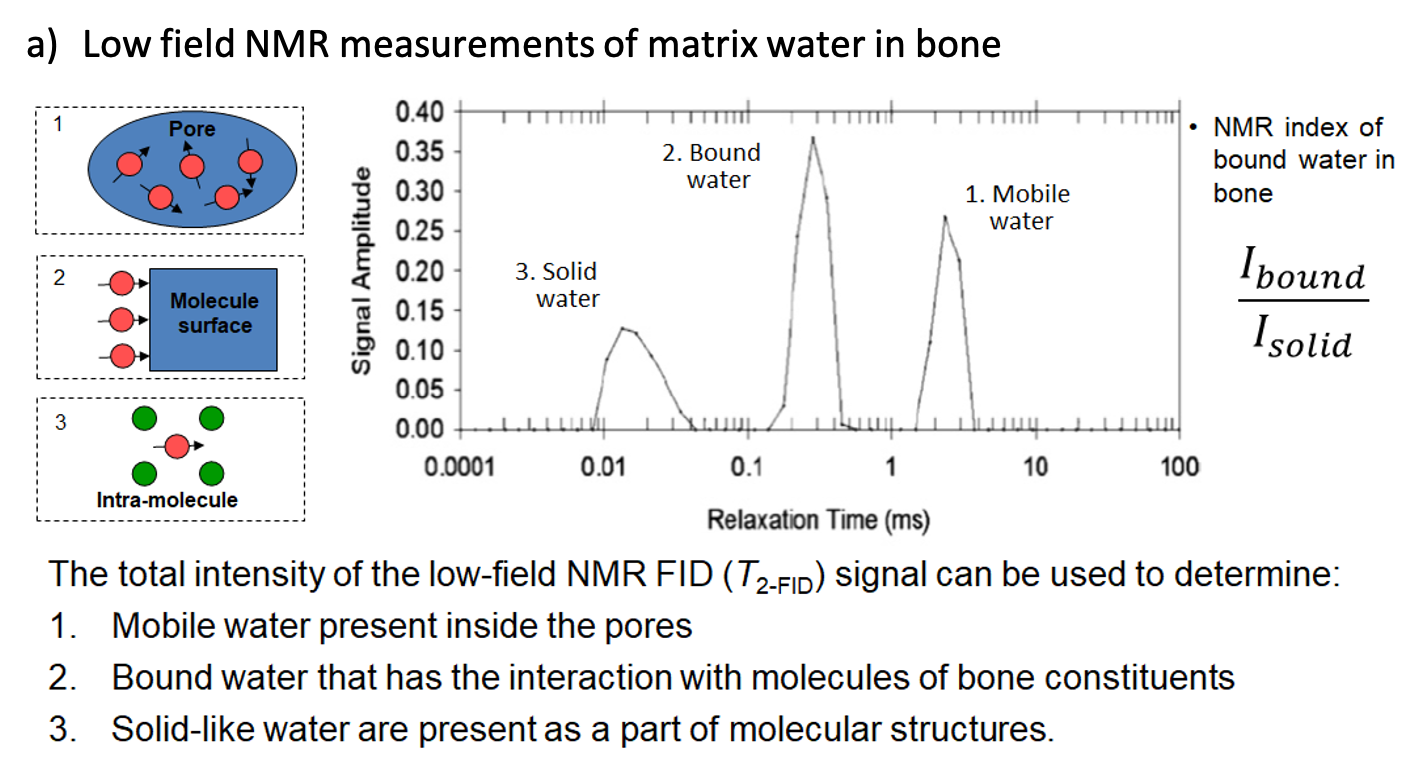
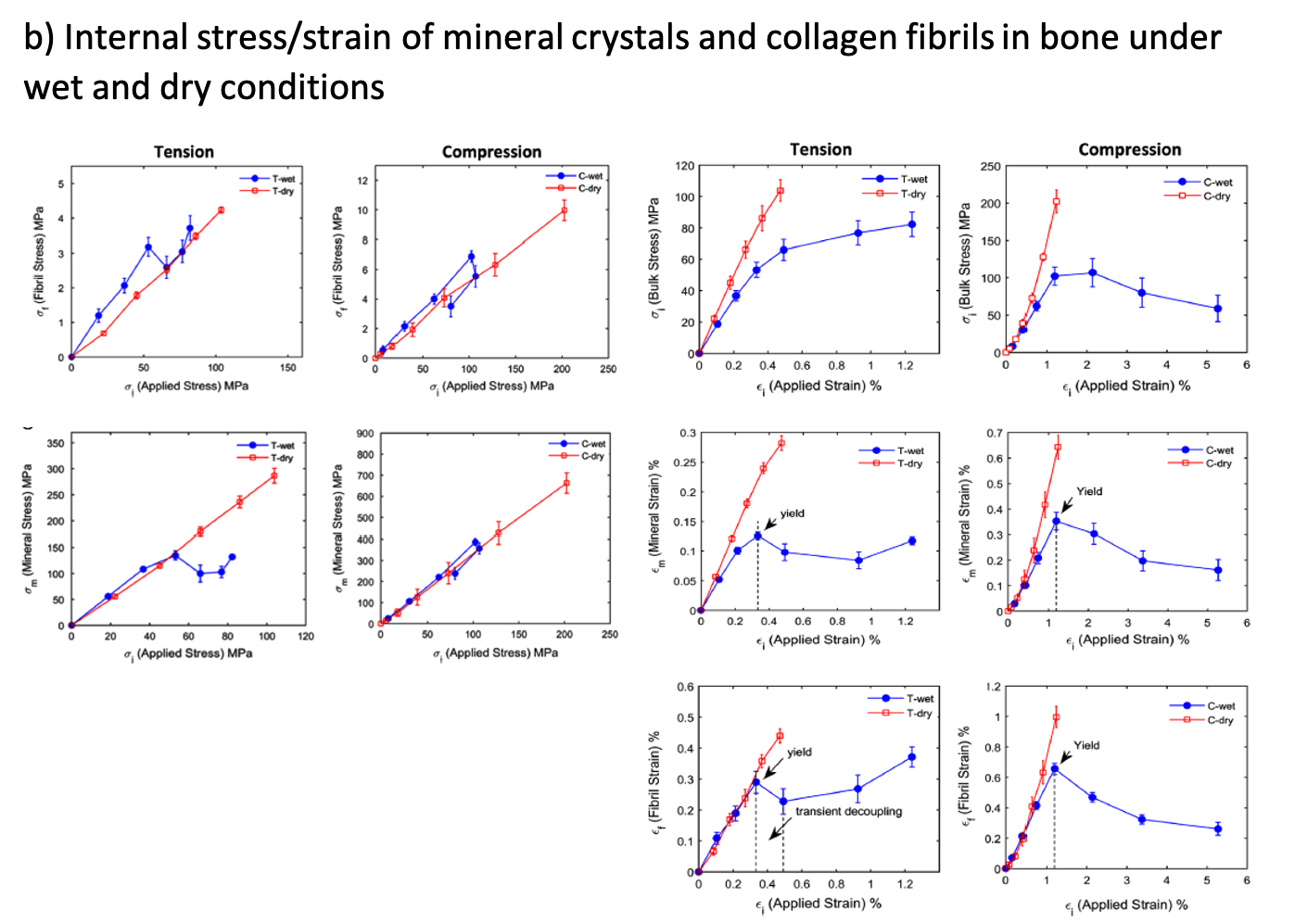
- J. Samuel, D. Sinha, C.-G. Zhao, X. Wang: Water residing in small ultrastructural spaces plays a critical role in the mechanical behavior of bone, Bone (2014) 59: 199–206.
- X. Wang, Q. Ni: Determination of cortical bone porosity and pore size distribution using a low field NMR approach, Journal of Orthopaedic Research 21 (2003) 312–319.
- Q. Ni, J. D. King, X. Wang: The characterization of human compact bone structure changes by low-field nuclear magnetic resonance, Measurement Science and Technology 15 (2004) 58–66.
- Q. Ni, J. S. Nyman, X. Wang, A. De Los Santos, D. P. Nicolella: Assessment of water distribution changes in human cortical bone by nuclear magnetic resonance, Measurement Science and Technology 18 (2007) 1–9.
1.4 Ultrastructural origins of osteogenesis imperfecta (OI) bone
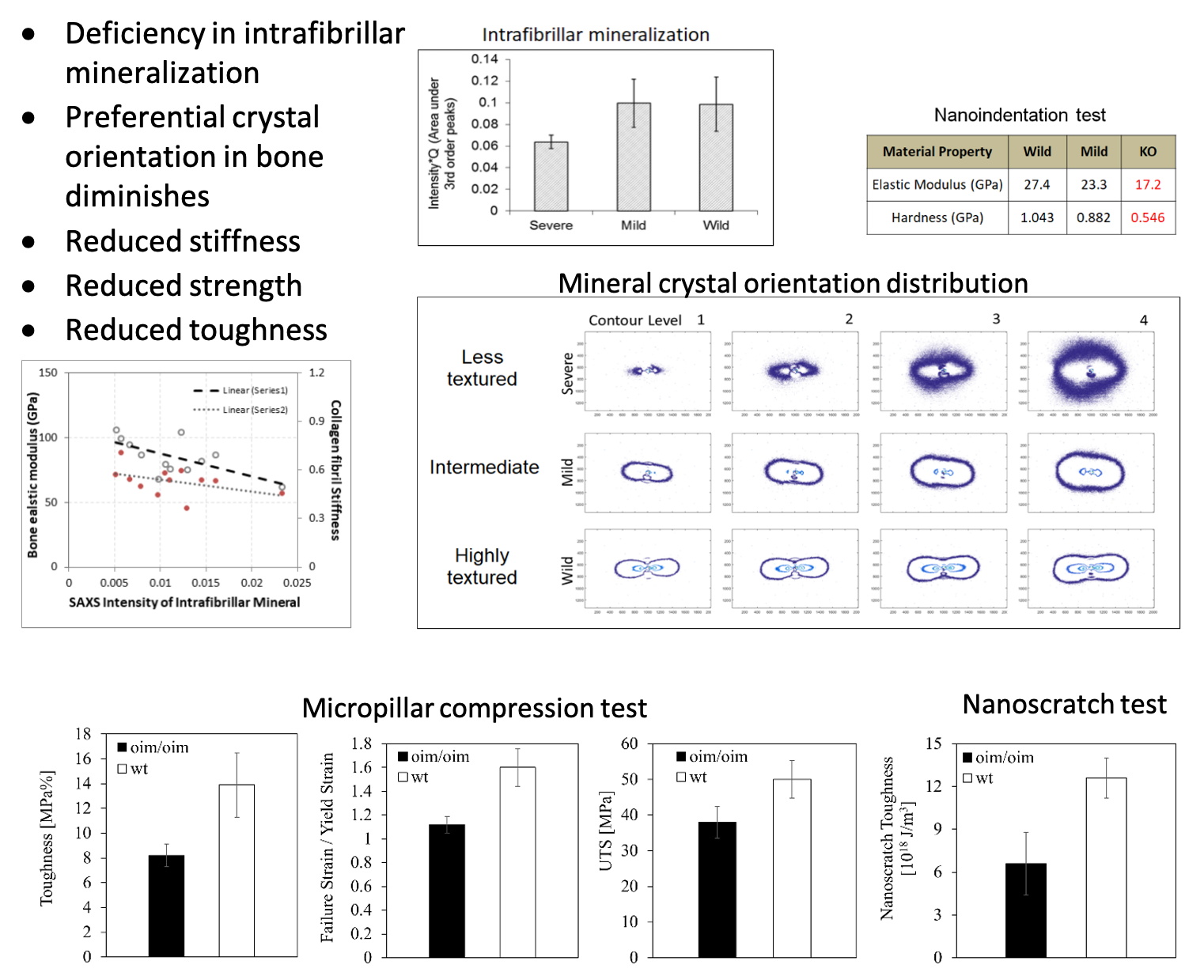
- M. Maghsoudi-Ganjeh, J. Samuel, A. S. Ahsan, X. Wang, X. Zeng: Intrafibrillar mineralization deficiency and osteogenesis imperfecta mouse bone fragility, Journal of the Mechanical Behavior of Biomedical Materials (2021) 117.
2. Role of Proteoglycans in Sustaining the Toughness of Bone
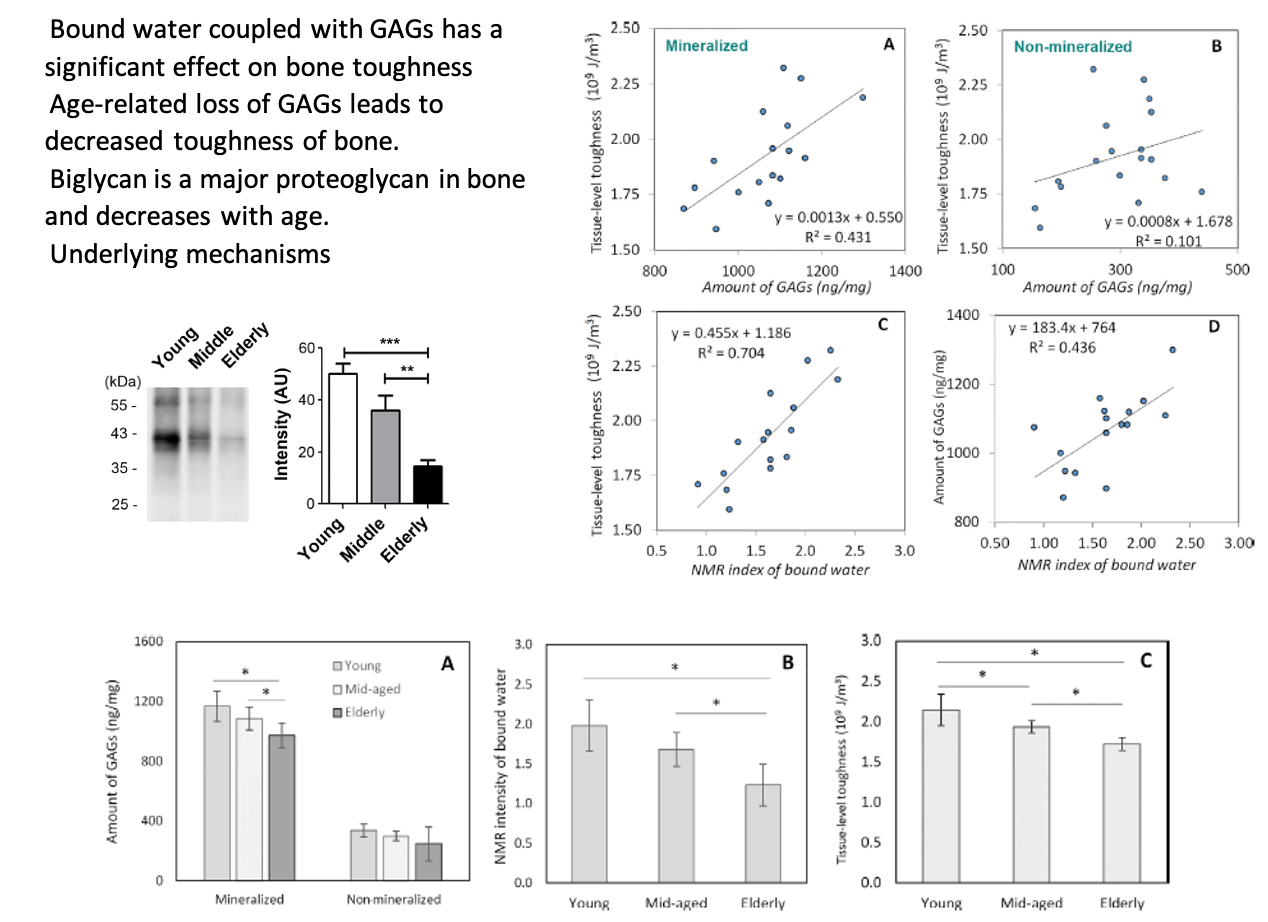
- X. Wang, R. Hua, A. Ahsan, Q. Ni, Y. Huang, S. Gu, J. X. Jiang: Age-related deterioration of bone toughness is related to diminishing amount of matrix glycosaminoglycans (GAGs), JBMR Plus (2018) 2(3): 164–173.
- X. Wang, H. Xu, Y. Huang, S. Gu, J. X. Jiang: Coupling effect of water and proteoglycan on the in situ toughness of bone, Journal of Bone and Mineral Research (2016) 31(5): 1026–1029.
3. Digital Model of Trabecular Bone

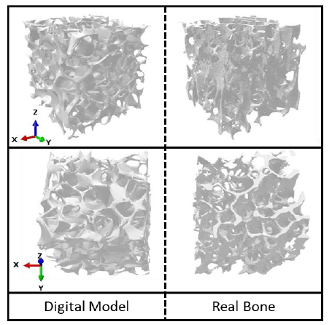
- F. Zhao, M. Kirby, A. Roy, Y. Hu, X. E. Guo, X. Wang: Commonality in the microarchitecture of trabecular bone: a preliminary study, Bone (2018) 111: 59–70.
- M. Kirby, A. Morshed, J. Gomez, P. Xiao, Y. Hu, X. E. Guo, X. Wang: Three-dimensional rendering of trabecular bone microarchitecture using a probabilistic approach, Biomechanics and Modeling in Mechanobiology (2020).
4. AI-Based Prognosis of Bone Fracture Risk
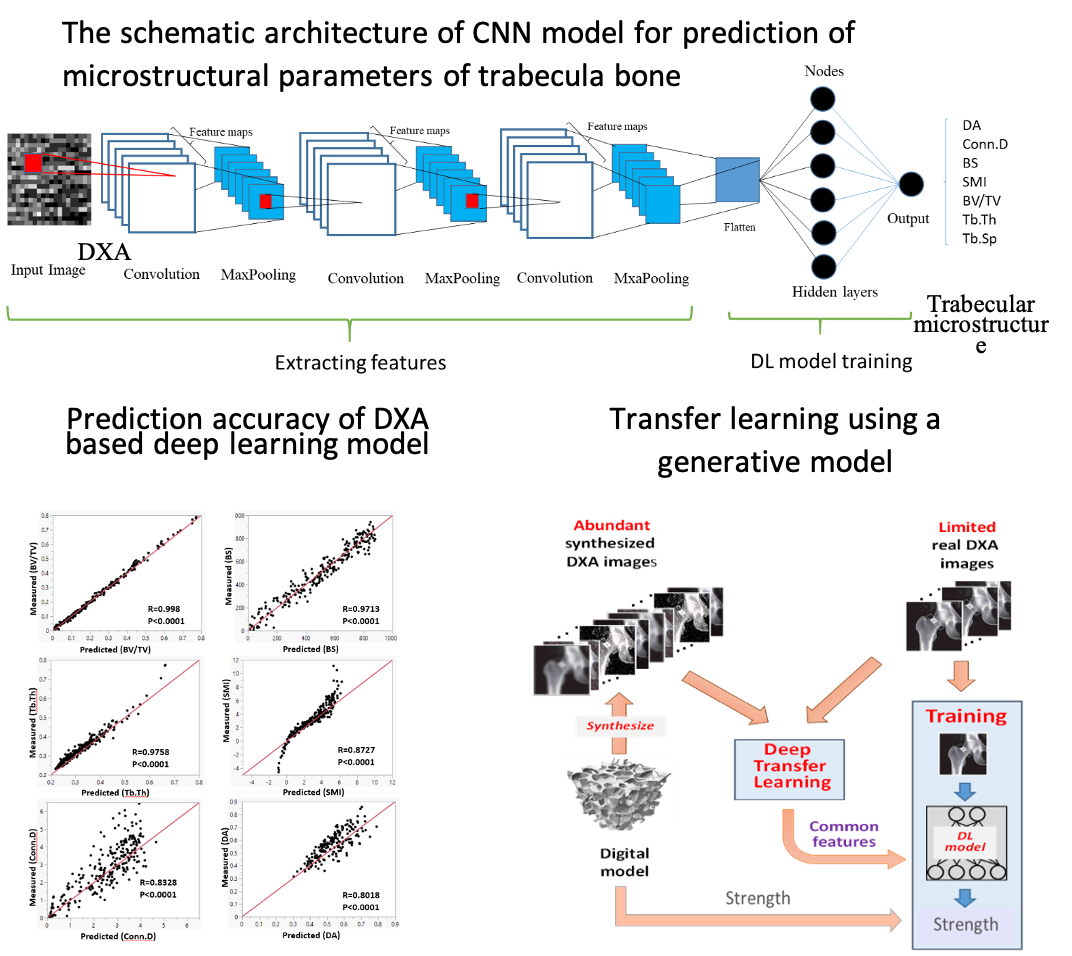
- P. Xiao, T. Zhang, X. N. Dong, Y. Han, Y. Huang, X. Wang: Prediction of trabecular bone architectural features by deep learning models using simulated DXA images, Bone Reports (2020).
- P. Xiao, T. Zhang, Y. Huang, X. Wang: A novel QCT-based deep transfer learning approach for predicting the stiffness tensor of trabecular bone cubes, IRBM (2024) 45(2): 100831.
- H. Zhang, P. Xiao, K. Ye, X. Wang: Conformity to stochastic invariance of microstructure influences mechanical competence of trabecular bone, Bone (2026) 209: 117925.